Kurdistan MPs Paid Billions as Parliament Remains Inactive for Over a Year
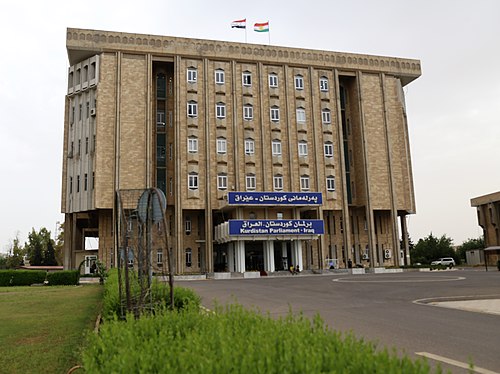
ERBIL, Kurdistan Region — More than a year after being sworn in, members of the Kurdistan Parliament have yet to convene a single formal session, despite collectively receiving billions of Iraqi dinars in salaries.
According to figures provided to Awene by Sarwar Abdulrahman, head of the Pay Organization for Parliamentary Affairs, 97 lawmakers elected in the Oct. 20, 2024 parliamentary elections have been paid for nine months without carrying out parliamentary duties. The total cost of those salaries has reached approximately 6.72 billion Iraqi dinars.
Lawmakers took their constitutional oath on Dec. 2, 2024, triggering the activation of their salaries. Abdulrahman said MPs were not paid for December due to a broader halt in public sector salaries that month, but payments resumed regularly from January through September and are expected to continue for October.
Each MP receives a base monthly salary of 8.2 million dinars. However, because parliamentary committees have not been formed, lawmakers do not receive the additional 500,000-dinar committee allowance. After deductions of around 300,000 dinars for housing and services, each lawmaker takes home roughly 7.7 million dinars per month—about 69.3 million dinars over nine months.
Under the parliament’s internal regulations, the first session should have included the election of the speaker and parliamentary leadership, the formation of committees, the election of the Kurdistan Region’s president, and the designation of the largest bloc to form a government. None of these steps has taken place.
“The time during which parliament remains closed cannot be compensated,” Abdulrahman said. “A parliament that does not legislate, approve budgets, or exercise oversight raises a fundamental question: What purpose does it serve?”
Three MPs—two from the Justice Group and one from the People’s Front—are not receiving salaries after refusing to take the oath in protest of the election results.
Justice Group lawmaker Omar Golpi said his bloc boycotted the swearing-in ceremony as a rejection of parliamentary privileges and what it considers a flawed process. He argued that lawmakers who took the oath bear responsibility for the continued paralysis.
“They should have ensured that parliament did not remain closed for an entire year,” Golpi said, calling the situation a “national embarrassment” and urging MPs to explain to the public why they continue to receive benefits while parliament remains inactive.
The Kurdistan Democratic Party (KDP), which holds the largest bloc in parliament, has blamed the Patriotic Union of Kurdistan (PUK) and opposition parties for the deadlock.
KDP lawmaker Mird Ali said his party has engaged in ongoing negotiations with the PUK and other political forces to reopen parliament and form a government.
“We are not the party that paralyzed parliament,” Ali said. “Any society’s lifeline is its parliament, and its closure has had serious social, economic, and political consequences.” He added that the KDP is prepared to reopen parliament within 48 hours if an agreement is reached.
The PUK maintains that a comprehensive political agreement must first be reached on the distribution of parliamentary and government positions. PUK lawmaker Shler Ghafour said the prolonged shutdown has created a legal vacuum, leaving the Kurdistan Region governed by a caretaker administration.
“A bloc that cannot complete quorum or form a government is not a real majority,” Ghafour said, adding that the PUK will only participate in a government where it is an equal partner.
The Islamic Group has also criticized the stalemate, saying it has repeatedly called for parliament’s reopening while emphasizing that MPs’ salaries are mandated by law.
Islamic Group lawmaker Mustafa Abdullah said his bloc has held multiple press conferences outside parliament to demand accountability from all parties involved.
“We have only received the legally defined salaries—around 7.4 million dinars per month—and no additional privileges,” Abdullah said. “It is not our fault that parliament remains closed.”
As the political impasse drags on, public frustration continues to grow over lawmakers being paid while the Kurdistan Parliament remains effectively dormant.
Author Profile

- Harki is an independent investigative journalist and human rights advocate. As a member of the National Union of Journalists (NUJ), he focuses on exposing corruption and human rights abuses in Kurdistan and Iraq. He voluntarily contributes to Kurdfile Media.
 Kurdistan9 May 2026Urgent Appeal for Sherwan Sherwani’s Life
 Opinion30 April 2026Looting Under the Flag: How Power Turned War into Private Wealth
 Democracy of Hell30 April 2026A Region in Name, A Dynasty in Practice
 Barzani24 April 2026U.S. Justice Department Targets Barzani-Linked Assets in Major Corruption Probe