
Aleppo: A Legal Assessment of Alleged Atrocities in Aleppo
Dr Rebwar Fatah
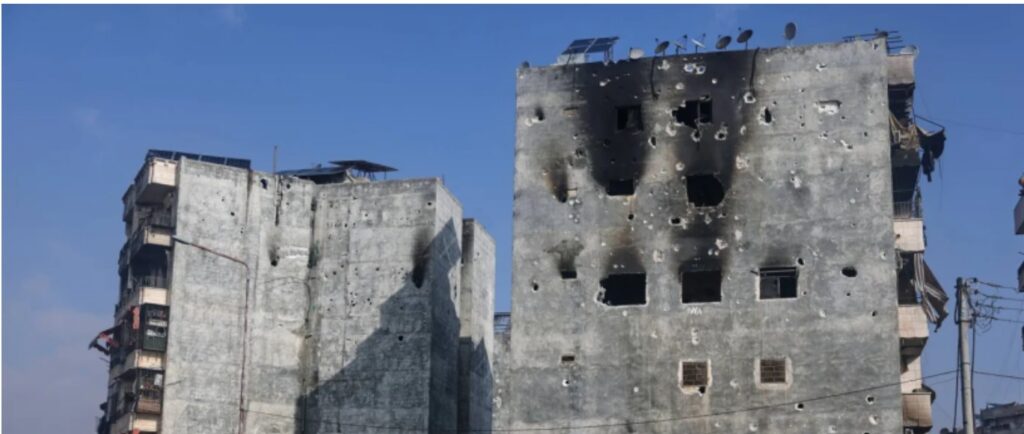
This article seeks to examine whether acts reported to have occurred in the Aleppo neighbourhoods of Al-Ashrafiyah and Sheikh Maksoud, at a time when these areas were under the control of a de facto governing authority associated with Ahmad Shara, may fall within the definition of crimes against humanity under international law. The analysis does not presuppose the accuracy of the allegations but proceeds on the basis of publicly available reporting, identifying legal and factual questions that would require clarification before any determination could be made.
First, it is necessary to consider whether the reported occupation of the two Aleppo neighbourhoods resulted from decisions taken solely at the local or national level, or whether it may have been influenced by broader political or military coordination. In this regard, media and diplomatic reporting has referred to discussions held at an international conference in Paris, reportedly monitored by the United States and involving various regional and international actors. It remains unclear whether these discussions addressed military operations in Aleppo, whether representatives linked to the Ahmad Shara administration were present, or whether Turkey and Qatar participated in any formal or informal capacity. Allegations concerning possible understandings related to territorial control—including claims involving Sweida, areas west of the Euphrates, or territory previously administered by the Syrian Democratic Forces—remain unverified and are referenced here solely as matters requiring independent factual investigation.
Second, an assessment is required of the extent to which external actors may have exercised influence, control, or operational capacity within Syrian territory at the relevant time. Israel, the United States, Turkey, and Qatar have each been reported to maintain varying degrees of military, political, or financial involvement in Syria. Publicly available sources indicate that Israel has conducted numerous air operations within Syrian territory over several years. The United States has maintained a military presence and operational freedom in certain regions, while Turkey has been reported to exercise influence over armed factions operating in northern Syria. Qatar has similarly been described as playing a political and financial role in the conflict. While the existence of such capacities or influence does not, in itself, give rise to international criminal responsibility, these factors may be relevant in assessing issues of knowledge, influence, or potential legal complicity, should other elements be established.
Third, reports issued by United Nations bodies and international non-governmental organisations indicate that forces operating within the current Syrian military and security landscape comprise a heterogeneous coalition of armed groups. Some of these groups have been described in international reporting as adhering to Islamist or ultra-nationalist ideologies. Such reporting further indicates that certain factions have previously engaged in hostilities affecting Kurdish civilian communities. Allegations of abuses committed against Kurdish civilians by some armed groups have been documented in multiple sources, though the precise composition, command structure, and conduct of forces operating in Aleppo at the relevant time require careful factual determination.
Fourth, publicly available reporting by United Nations mechanisms and international organisations further indicates that some armed groups operating in Syria, or predecessor or successor formations thereof, have previously been implicated in serious violations against other civilian populations, including Alawite and Druze communities, during earlier phases of the conflict. Reports concerning incidents in coastal regions and in Idlib province are relevant insofar as they may inform an assessment of whether patterns of violence existed and whether those exercising command authority knew, or should have known, of a substantial risk that deployed forces could commit violations against civilian populations.
In light of these considerations, the legal analysis must address whether the acts alleged to have occurred in Aleppo formed part of a widespread or systematic attack directed against a civilian population, whether such acts were carried out pursuant to an organisational or state-like policy, and whether individuals exercising effective control possessed the requisite knowledge under international criminal law. The analysis must also examine issues of command responsibility and, where applicable, the legal thresholds for responsibility of external actors, including through aiding and abetting or other forms of facilitation.
Accordingly, the central question is whether the reported atrocities in Aleppo were foreseeable in light of available information and prior patterns of conduct, and whether any external actors—through the exercise of control, coordination, or the provision of substantial assistance—could potentially bear legal responsibility under international criminal law, as distinct from moral, political, or policy-based responsibility. No conclusions are drawn in this regard, and any such determination would require a comprehensive assessment by a competent investigative or judicial body.
Section Title
Author Profile

- Dr Rebwar Fatah
- Dr Rebwar Fatah is a London based Middle East and North Africa (MENA) expert, provides expert analysis on the complex dynamics shaping the region. Beyond his professional pursuits, Dr Fatah is an accomplished writer, poet, and photographer, bringing a unique creative perspective to his observations of the world.
 Secuirty3 June 2026The Aborted Front: Türkiye’s Veto and the Geopolitics of Arming Iranian Kurds
- Barzani24 May 2026Dynasty and Deadlock: The KRG Governance Crisis
- Uncategorised19 May 2026The House That Was Never Built: On the Failure of Institution-Building and the Crisis of Collective Vision in Post-1991 Kurdistan
- Kurdistan15 March 2026Halabja: A Legacy of Poison, Politics, and Unfinished Justice