The Mujahedin-e Khalq: From Saddam’s Embrace to the Camps of Albania
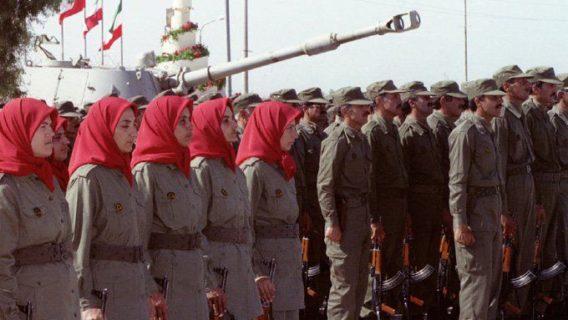
The Iranian Mujahedin-e Khalq Organization (MEK) is one of the most controversial opposition forces in Iran. This organization, whose history goes back nearly six decades, has undergone dramatic changes in its alliances, places of residence, and ideology throughout its existence.
This report sheds light on their current situation, their history, and the accusations they have faced regarding the suppression of Kurds.
Migration from Iraq to Albania
After three decades of presence in Iraq, the Mujahedin-e Khalq are no longer based there. The process of their departure from Iraq began in 2012, and in September 2016 their final group officially left Iraq.
The majority of the organization’s members (around 3,000 people) are settled in a modern, fortified camp known as “Ashraf-3” in the area of “Manëz,” near Tirana, the capital of Albania. This camp functions like a closed town and contains all necessities of daily life.
At the same time, the political office and leadership of the organization (especially Maryam Rajavi) are based in a town near Paris, the capital of France, operating as a diplomatic and media center under the name “National Council of Resistance of Iran.”
Key Positions and Ideological Orientation
The organization was founded in 1965 by Mohammad Hanifnejad and his colleagues as a movement opposing the Shah of Iran.
Initially, the ideology of the Mujahedin was known as “Islamic–Marxist,” a mixture of revolutionary Islamic thought and Marxist theories aimed at confronting imperialism. Later, however, the organization emphasized a “democratic Islam” that differs from the doctrine of Velayat-e Faqih.
Three Historical Turning Points
These three stages can be identified as the most prominent turning points of the movement:
- The 1979 Revolution: They played an active role in overthrowing the Shah, but soon entered into conflict with Khomeini.
- 1981 (Internal Conflict): After bloody clashes with the Islamic Republic, the organization moved toward Europe and later to Iraq.
- 1986–1988: During the Iran–Iraq War, Saddam Hussein gave them refuge, and they formed the “National Liberation Army,” fighting against the Iranian army.
Crimes Against the Kurds
This point represents one of the darkest chapters in the history of the organization.
During the 1991 Kurdish uprising in Southern Kurdistan, the Mujahedin-e Khalq acted as an auxiliary force for the Baath regime.
After the uprising began, the Mujahedin-e Khalq, using tanks and heavy weapons, launched an operation called “Morvarid” and blocked the advance of Peshmerga forces in areas such as Kifri, Kalar, Tuz Khurmatu, and Jalawla.
According to eyewitnesses and international reports, the Mujahedin opened fire on civilians in these areas and caused numerous casualties, including children.
The Current Role of the Mujahedin in the Iranian Opposition
Today, the Mujahedin-e Khalq are considered the “most organized” external opposition force, but their standing inside Iran and among other opposition groups remains highly disputed.
On the international stage, the organization has strong lobbying networks in the United States and Europe. They present themselves as a “ready alternative” to the Islamic Republic.
Inside Iran, the government views them as one of its greatest enemies. During the protests of 2017, 2019, and 2022 (the Jina uprising), the organization attempted to influence and encourage the protests.
One of the major problems facing the Mujahedin is their poor relationship with other opposition groups. Most opposition forces accuse them of having a dictatorial and undemocratic internal structure.
In conclusion, although the Mujahedin-e Khalq appear as one of the most organized opposition forces against Iran, they have still failed to become a force that is fully accepted both internationally and domestically. A large part of this is related to their methods of operation, leadership style, and their inability to move beyond a past that continues to haunt them like a shadow.
Author Profile

- Harki is an independent investigative journalist and human rights advocate. As a member of the National Union of Journalists (NUJ), he focuses on exposing corruption and human rights abuses in Kurdistan and Iraq. He voluntarily contributes to Kurdfile Media.
 Kurdistan9 May 2026Urgent Appeal for Sherwan Sherwani’s Life
 Opinion30 April 2026Looting Under the Flag: How Power Turned War into Private Wealth
 Democracy of Hell30 April 2026A Region in Name, A Dynasty in Practice
 Barzani24 April 2026U.S. Justice Department Targets Barzani-Linked Assets in Major Corruption Probe