
The Strategic Trap: Why War with Iran Is the Wrong Moment for Kurdish Armed Movements
Dr Rebwar Fatah
Thesis: Reports suggest that a coalition of Kurdish political groups may be considering entering Iran as armed factions, viewing the conflict between Iran, Israel, and the United States as an opportunity to advance their cause. This strategy is deeply flawed and risks catastrophic consequences. Initiating an armed movement against Iran during a foreign attack will not help the Kurdish cause; it will likely provoke a brutal crackdown, regionals isolation, and irreversible damage to their legitimacy.
 The Fatal Flaw in the Armed Strategy
Any armed initiative must ask: what is the ultimate aim? If the goal is to establish an autonomous Kurdish region within Iran, the aftermath must be considered. Once the initial conflict concludes—assuming Iran survives external pressures—it is highly probable that Tehran, potentially with tacit support from regional powers such as Iraq and Turkey (which also face Kurdish populations), would move decisively to suppress any Kurdish initiatives.
Syria offers a sobering lesson. Kurdish aspirations there were gradually curtailed through territorial rollback, mass displacement, and demographic engineering. At the height of the war against the Islamic State, Kurdish-led forces within the Syrian Democratic Forces controlled roughly one-third of Syrian territory. Yet this autonomy proved fragile. The Turkish military intervention in Afrin during Operation Olive Branch displaced hundreds of thousands of Kurdish civilians and caused documented civilian casualties, though these figures likely understate the full humanitarian impact. Subsequent instability in Sheikh Maqsoud and Ashrafiyeh further demonstrated how quickly territorial gains can vanish when regional powers align against Kurdish autonomy.
The Trump administration, despite years of partnerships with Kurds, did not broker agreements to prevent abuses. Instead, it allowed Turkish-backed militias, some including radical Islamist factions, to operate, leaving Kurdish populations exposed to serious human rights violations. The episode illustrated the inherent limits of external guarantees: once strategic priorities shifted, Kurdish partners were increasingly vulnerable to regional power dynamics.
A Self-Defeating Narrative
Armed struggle risks fundamentally altering the Kurdish narrative. Kurds could shift from being perceived as an oppressed people seeking rights to being seen as proxies of foreign powers, namely the USA and Israel. This delegitimizes the cause in the eyes of Iranians and the broader region, providing Tehran with justification for harsh repression. Armed struggle has increasingly proven to be a risky and often counterproductive path to national rights in the contemporary Middle East.
Crucially, the Kurdish question in Iran cannot be separated from the broader future of the Iranian state. Pursuing political objectives through armed intervention during a foreign conflict risks reinforcing the narrative that Kurdish movements are instruments of external powers rather than legitimate actors within Iranian society. In reality, the Kurdish issue is inseparable from the wider struggle for pluralism, political reform, and democratic governance across Iran.
 The Alternative: A Peaceful and Inclusive Vision
This is not a call for passivity. On the contrary, the current turmoil presents an opportunity—but for political engagement, not military action. Kurdish groups can initiate a fresh, inclusive debate about Iran’s future.
This requires a multi-pronged approach:
1. Internal Reorganization: Kurdish political groups must modernize and reflect contemporary social realities, not merely rely on outdated mandates or ethno-religious claims.
2. Inclusive National Dialogue: Efforts should include other ethnic and religious groups and engage the international community. The debate must confront deeper questions about governance and legitimacy in Iran: how can a nation with such a rich and diverse population be governed by the narrow ideology of one sect? Diversity should be a source of strength, allowing Iran to harness its human and cultural capital rather than rely on proxy wars and weapons that foster division.
3. Defining the Future, Not Just Structures: Rather than relying on ambiguous concepts such as “federalism” or “confederalism,” the focus should be on the desired social and political contract for Iran. A clear vision for a democratic and inclusive Iran is more powerful than any structural label.
Expanding the Horizon and Redefining the Goal
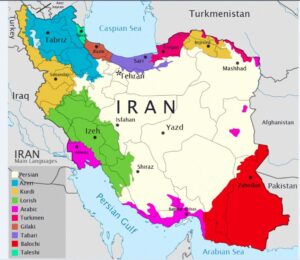
Kurds must frame their struggle as part of a broader Iranian and global vision. Despite frequent accusations from Iran, Turkey, and other actors, most Kurdish political groups in Iran do not pursue an independent state; they seek legitimate rights within Iran. Yet these goals remain undefined. Are they seeking rights under the current regime, reforms to the system, or a fundamental transformation of governance?
In all scenarios, Kurdish aspirations cannot succeed in isolation. Kurdish populations are deeply intertwined with other communities, making alliances within Iran essential. Even in the long-term pursuit of autonomy or independence, territorial control without domestic legitimacy is unsustainable. Reforming the system may also encounter limits, as Tehran has historically relied on coercion when its core structure is challenged.
Conclusion: The Long and Painful Road
There is no true “zero point” in any people’s struggle. Progress is incremental, and immediate territorial gains often come at the cost of long-term security and legitimacy. Kurdish groups must move away from an “all or nothing” mindset. Pursuing political and cultural rights is crucial, but more important is building alliances with other Iranian communities and the international community. This is the only sustainable path to lasting rights, dignity, and peace.
The lesson from Syria is clear: military gains achieved through external support are fragile, and armed intervention during a foreign war risks undermining both legitimacy and long-term objectives. For Kurds in Iran, strategic patience, inclusive politics, and a clear vision for the future will achieve far more than any short-term armed initiative.
Author Profile

- Dr Rebwar Fatah is a London based Middle East and North Africa (MENA) expert, provides expert analysis on the complex dynamics shaping the region. Beyond his professional pursuits, Dr Fatah is an accomplished writer, poet, and photographer, bringing a unique creative perspective to his observations of the world.
 Kurdistan15 March 2026Halabja: A Legacy of Poison, Politics, and Unfinished Justice
- Uncategorised12 March 2026The Strategic Trap: Why War with Iran Is the Wrong Moment for Kurdish Armed Movements
- Uncategorised8 March 2026A Thesis on Womanhood, Rights, and the Human Journey
- Uncategorised6 March 2026The Three Stages of the US-Israeli War Against Iran: From Diplomacy to Covert Ground Operations