
Party Militias Must Leave Iraq
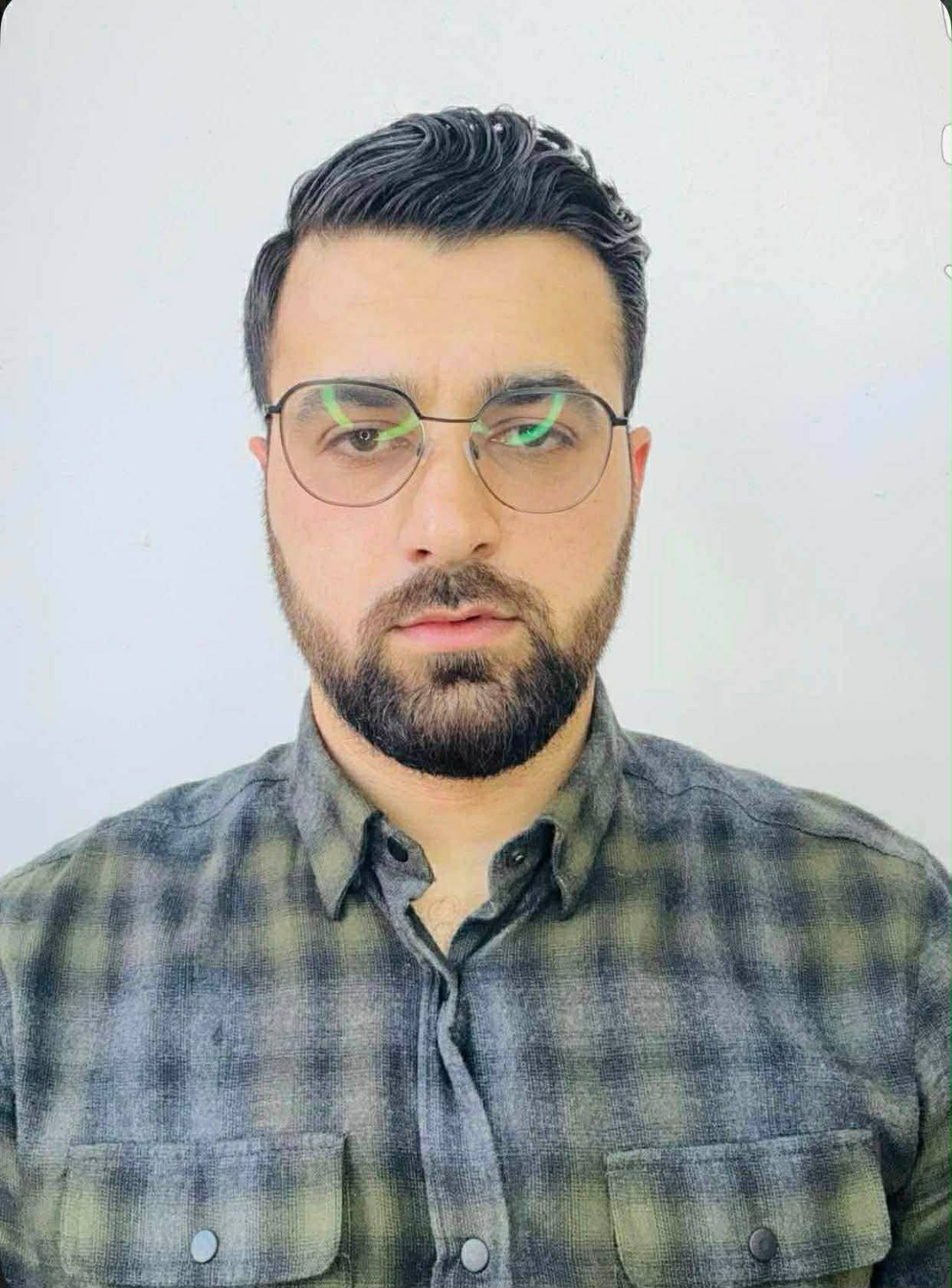
Rawaz Abdullah Mahmoud – Activist
The Kurdistan Region and Iraq have once again been drawn into cycles of war and destruction. Today, the country is exposed to airstrikes, missile attacks, and drone warfare from multiple directions. Yet, despite these escalating threats, Iraq does not possess a unified national defense force capable of responding effectively. Instead, its fragmented security landscape has left it vulnerable—both internally divided and externally exposed.
At its core, the legitimacy of any government rests on its ability to provide security for its citizens and defend its sovereignty. This is not merely a political obligation; it is the foundation of statehood itself. When a government cannot protect its territory or its people, its authority weakens, and public trust begins to erode.
While it is necessary to condemn the foreign actors responsible for violating Iraqi airspace and sovereignty, it is equally important to confront an uncomfortable truth: internal disunity has made these violations possible. A state that lacks a cohesive military command invites interference. Iraq’s current condition is not solely the result of external aggression, but also of internal structural failure.
The most critical of these failures is the absence of a strong, unified national army. In principle, Iraq has the institutional framework for such a force—one that should be authorized by parliament and directed by the commander-in-chief through the Ministry of Defense. In practice, however, power is fragmented across a wide range of armed groups that operate outside formal state control.
In Iraq, many factions within the Hashd al-Shaabi function independently of the Ministry of Defense. While some of these groups were initially mobilized to confront existential threats, they have since evolved into entrenched forces with political affiliations and external loyalties. Their command structures are often shaped by party interests rather than national priorities, making them susceptible to manipulation and weakening the coherence of Iraq’s defense strategy.
A similar fragmentation exists in the Kurdistan Region. Despite years of discussion and reform efforts, the Peshmerga forces remain divided along political lines. Units such as those aligned with major parties continue to operate under separate chains of command, reflecting partisan loyalties rather than national unity. This division not only undermines operational effectiveness but also sends a message of disunity at a time when cohesion is most needed.
Beyond these well-known forces, numerous other armed groups operate under different names and banners, frequently bypassing legal frameworks and official oversight. The proliferation of such groups has blurred the line between state authority and non-state actors, creating a security environment that is inconsistent, unpredictable, and difficult to govern.
This fragmented system carries serious consequences. It weakens Iraq’s ability to deter external threats, complicates coordination during crises, and opens the door to foreign influence. More importantly, it undermines the very idea of a sovereign state—one in which the monopoly on the use of force belongs exclusively to the government.
Iraq’s geographic location places it at the center of regional tensions and competing interests. This reality cannot be changed, but the country’s internal structure can. To navigate this volatile environment, Iraq must prioritize the creation of a unified, professional, and apolitical defense force. Such a force must operate under a single command, adhere to national law, and remain independent of political parties and personal interests.
The path forward requires difficult but necessary decisions: the integration or disbandment of militias, the unification of fragmented forces, and the reassertion of state authority over all armed actors. Without these steps, Iraq will remain vulnerable—its sovereignty compromised not only by external forces, but by its own internal divisions.
A strong state cannot coexist with competing centers of military power. If Iraq is to secure its future, party militias must give way to a single national army that serves the country as a whole, not the interests of factions within it.
Author Profile

 Opinion1 April 2026Party Militias Must Leave Iraq
 Opinion24 March 2026The Kurdistan Region between national concern and uncontrolled domination
 Opinion13 March 2026The Parliament of the Kurdistan Region has been closed for more than 500 days!
 Opinion7 March 2026Plundering the Revenues of the Kurdistan Region by the Authorities of the KDP and PUK