Kirkuk Pipeline Resumes: A Strategic Shift That Could Undercut KRG Leverage
The announcement by the head of State Organization for Marketing of Oil (SOMO) that exports through the Kirkuk–Turkey pipeline have resumed marks a potentially decisive shift in Iraq’s energy and political landscape—one that may significantly weaken the Kurdistan Region’s long-held leverage over Baghdad.
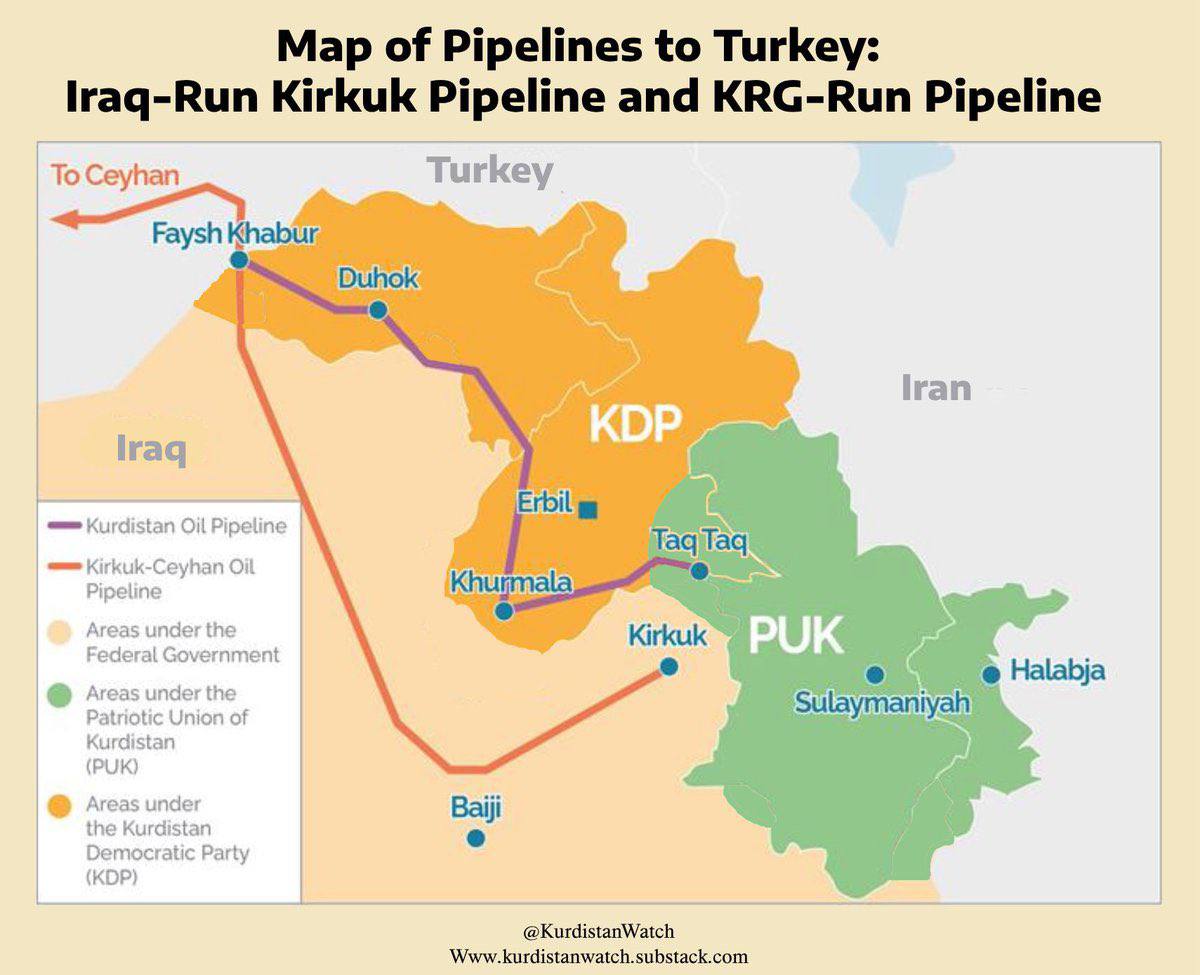
For more than a decade, the pipeline had been effectively offline. Since 2014, when ISIS seized large sections of northern Iraq and damaged key infrastructure, Kirkuk’s direct export route to Turkey was rendered inoperable. In its absence, the only viable northern export corridor became the pipeline controlled by the Kurdistan Regional Government (KRG), running independently to Turkey.
That arrangement was not merely technical—it was political. Control over the export route translated into bargaining power. For years, Erbil used this position to negotiate budget shares, oil revenue arrangements, and broader political concessions from Baghdad.
The reopening of the Kirkuk–Turkey line changes that equation.
It comes at a particularly sensitive moment. Following disruptions linked to tensions around the Strait of Hormuz, the KRG sought to leverage regional instability to extract concessions from the federal government. The logic was straightforward: with alternative export routes under pressure, Kurdish-controlled infrastructure would become even more indispensable.
However, that strategy appears to have produced unintended consequences.
Under pressure—reportedly including significant involvement from the United States—Erbil stepped back from escalation. At the same time, Baghdad accelerated efforts to restore its own independent export capacity through Kirkuk. What was intended as leverage may, in practice, have triggered a counter-move that reduces it.
The implications are substantial. By reactivating the Kirkuk pipeline, Baghdad regains a degree of autonomy it has lacked for years. It can now bypass KRG-controlled routes and reassert federal authority over northern oil exports—one of the most contentious issues in post-2003 Iraq.
For the KRG, the risk is not immediate collapse of influence, but gradual erosion. Its strategic value to both Baghdad and external actors has long been tied to its control over energy flows. As alternative routes come back online, that value diminishes.
At a deeper level, this development reflects a recurring pattern in Iraqi politics: tactical manoeuvres often produce structural consequences. The KRG’s attempt to capitalise on regional instability may have been rational in the short term, but it also incentivised Baghdad—and its international partners—to invest in bypassing Kurdish leverage altogether.
None of this resolves the underlying disputes over oil revenue sharing, constitutional authority, or federal-regional relations. But it does shift the balance of power.
What emerges is a quieter, more strategic recalibration—one in which infrastructure, not rhetoric, determines who holds the upper hand.
Author Profile

- Diyar Harki is an independent investigative journalist and human rights advocate. As a member of the National Union of Journalists (NUJ), he focuses on exposing corruption and human rights abuses in Kurdistan and Iraq. He voluntarily contributes to Kurdfile Media.
 Uncategorised7 April 2026Family Torn Apart: Drone Strike Kills Couple Near Erbil
 Journalism7 April 2026Kataib Hezbollah Frees Shelly Kittleson But the Message Is Clear
 Journalism5 April 2026Abduction in Baghdad: Militias, Impunity, and the Strategic Logic Behind Shelly Kittleson’s Kidnapping
 Journalism4 April 2026Dohuk Detentions Expose a Deeper Crisis Behind Kurdistan’s Electricity Policy