KDP–PUK Standoff Leaves Kurdistan Parliament’s Future Hanging on Three Scenarios
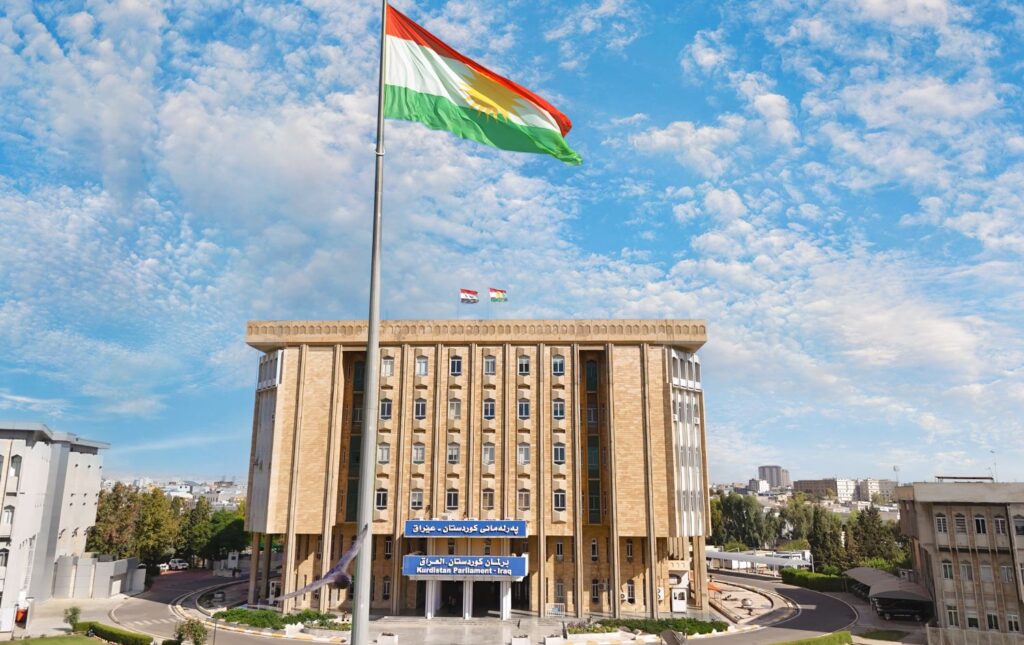
Nearly one year and one month after the 2024 Kurdistan parliamentary elections, the legislature remains without an established presidency, leaving the future of the region’s key governing institution in limbo. The ongoing political deadlock between the Kurdistan Democratic Party (KDP) and the Patriotic Union of Kurdistan (PUK) has now narrowed the Parliament’s fate to three possible scenarios, according to political observers.
Scenario 1: Dissolution of Parliament
One scenario now being widely discussed is the dissolution of the Kurdistan Parliament—a move never before taken in the region’s 34-year history of self-governance. Dissolution would take place if the two main parties fail to reach agreement on forming a government and resolving disputes over key posts.
On Wednesday, KDP spokesperson Mohammed Mahmoud told Rudaw that the party “hopes the situation will not reach the point of dissolving parliament and calling for a new election.”
Analysts say the KDP believes its electoral standing across the region has strengthened and may consider using the dissolution option as leverage. For the PUK, the weakened state of opposition parties means new elections may not pose significant risk.
A senior KDP official who declined to be named told KurdFile that the topic of re-elections “is on the table” inside the party and that the KDP is unlikely to adopt a soft stance toward the PUK.
Scenario 2: A Pressure Tactic — Convening Parliament Without Agreement
Another scenario is for the KDP to proceed with convening a parliamentary session without a political agreement with the PUK. This would serve as a direct message that the KDP can attempt to activate parliament on its own.
According to KurdFile’s inquiries, the KDP has already prepared for such a session and has reportedly secured support from some MPs outside its own faction, although this remains unconfirmed.
However, even if the KDP reaches the quorum needed to open the session, it will face major obstacles forming a government without the PUK. Without a strong partner comparable to the former Gorran Movement, the KDP would struggle to build cabinets or use parliament as an effective tool against the PUK. Moreover, given the two existing de facto administrative zones in the region, unilateral action risks provoking measures from the PUK that could ultimately hurt the KDP.
Scenario 3: The Most Realistic Outcome A KDP-PUK Agreement
The final scenario—and the one analysts consider most realistic—is a comprehensive agreement between the KDP and PUK covering posts in both Erbil and Baghdad.
The two parties came close to a deal earlier, but tensions flared during negotiations over parliamentary procedures and election results. Despite this, political observers note that the KDP and PUK have a long history of intense disputes followed by eventual compromise.
Analysts believe both sides remain wary of Baghdad’s growing influence. The KDP is particularly concerned about the PUK’s potential rapprochement with Iraqi political blocs, while the PUK fears regional and federal pressure on the Kurdistan Region. These factors may push both parties toward a negotiated settlement.
Author Profile

- Diyar Harki is an independent investigative journalist and human rights advocate. As a member of the National Union of Journalists (NUJ), he focuses on exposing corruption and human rights abuses in Kurdistan and Iraq. He voluntarily contributes to Kurdfile Media.
 Kurdistan18 January 2026Will the Terrorists Be Released?
- Opinion17 January 2026A Risk That Could Reshape the Kurdistan Region
 Reports7 January 2026Kurdistan MPs Receive Millions in Salaries as Parliament Remains Paralyzed
 Political3 January 202634% of Kurdish MPs in Iraqi Parliament Lack Arabic Proficiency