
Family Torn Apart: Drone Strike Kills Couple Near Erbil
KurdFile Media
The war between regional powers has once again claimed lives far from the frontlines.
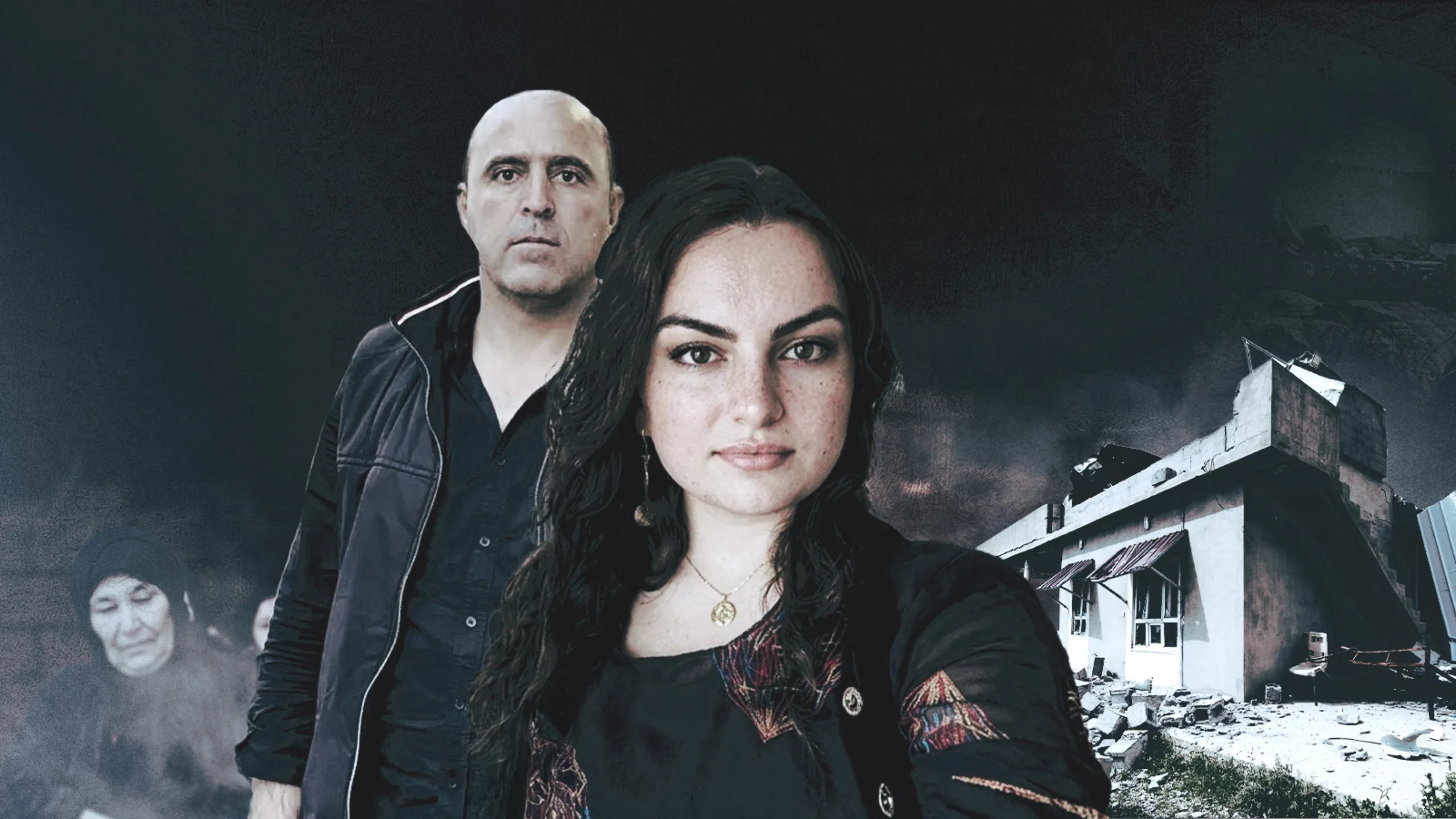
In a quiet village north of Erbil, Musa Rasul and his wife Mujda Hassan were at home on Monday night when a drone strike hit their house directly, killing them both and leaving behind two young children now orphaned.
The strike occurred in the Darashakran subdistrict—an area with no known military installations—underscoring a troubling shift in the pattern of attacks on the Kurdistan Region. What began as targeted strikes tied to broader regional escalation is increasingly bleeding into civilian space.
Since the outbreak of the US-Israeli war on Iran, the Kurdistan Region has faced near-daily drone and missile attacks. While many have been framed as targeting opposition groups or strategic assets, incidents like this raise urgent questions about accuracy, intent, and accountability.
There is, as yet, no clear explanation for why this particular home was struck.
What is clear, however, is the human cost. The bodies of Musa Rasul and Mujda Hassan were recovered from beneath the rubble of their bedroom—an image that reflects not just the violence of the தாக்க, but its intimacy. This was not a battlefield. It was a home.
For residents of the Region, such incidents are becoming part of a new and dangerous normal. Rural areas, once considered relatively insulated, are now exposed. The lines between military targets and civilian life are increasingly blurred.
The political context only deepens the concern. The Kurdistan Region is not a primary actor in the broader conflict between Iran, the United States, and Israel, yet it has become one of its most immediate . External actors pursue their strategic objectives, while local populations absorb the consequences.
At the same time, the response from both Iraqi federal government and regional authorities has remained limited, reinforcing perceptions that civilian protection is secondary to geopolitical calculations.
For the two children left behind, these dynamics are abstract. What remains is the immediate reality: a family destroyed in an instant, without warning, without explanation.
This is the true cost of a war that continues to expand beyond its declared fronts—measured not only in strategic shifts, but in lives shattered in places that were never meant to be targets.
Author Profile

- Diyar Harki is an independent investigative journalist and human rights advocate. As a member of the National Union of Journalists (NUJ), he focuses on exposing corruption and human rights abuses in Kurdistan and Iraq. He voluntarily contributes to Kurdfile Media.
 Uncategorised7 April 2026Family Torn Apart: Drone Strike Kills Couple Near Erbil
 Journalism7 April 2026Kataib Hezbollah Frees Shelly Kittleson But the Message Is Clear
 Journalism5 April 2026Abduction in Baghdad: Militias, Impunity, and the Strategic Logic Behind Shelly Kittleson’s Kidnapping
 Journalism4 April 2026Dohuk Detentions Expose a Deeper Crisis Behind Kurdistan’s Electricity Policy