Amedi’s Election Deepens Kurdish Divide and Exposes Iraq’s Fragile Power Balance
By Diyar Harki
KurdFile Media
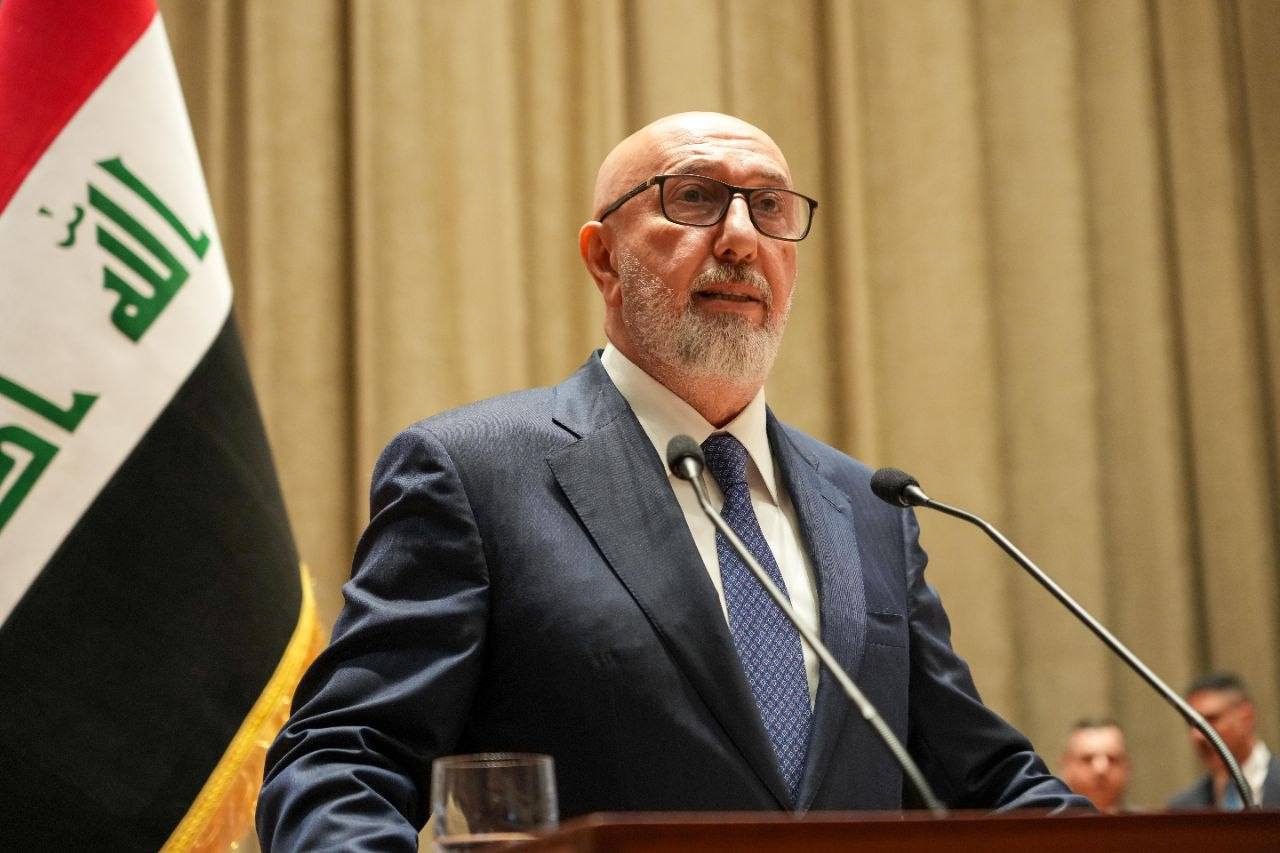
The election of Nizar Amedi as Iraq’s president was meant to close one chapter of post-election deadlock. Instead, it has opened another—one that underscores deepening fractures within Kurdish politics and the broader instability of Iraq’s power-sharing system.
Held in Baghdad, the parliamentary session that elevated Amedi to the presidency was boycotted by the Kurdistan Democratic Party (KDP), the dominant force in the Kurdistan Region. The absence was not symbolic—it was strategic. Shortly after the vote, the KDP outright rejected the process, declaring it does not recognize the outcome or the legitimacy of anyone elected through it as representing the Kurdish majority.
This is not merely a dispute over procedure. It is a contest over representation.
For decades, Iraq’s post-2003 political order has rested on an informal but rigid distribution of power: the presidency for the Kurds, the premiership for Shi’ite , and the speakership for Sunni Arabs. Within the Kurdish camp, the presidency has traditionally been held by the Patriotic Union of Kurdistan (PUK), while the KDP consolidated control over the Kurdistan Region’s internal institutions.
That balance is now under strain.
The KDP, already holding the presidency of the Kurdistan Region and the premiership in Erbil, sought to extend its influence to Baghdad by claiming the federal presidency. The PUK, for its part, treated the position as a red line. The result was a prolonged deadlock that delayed not only the presidential vote but also the formation of the Kurdistan Regional Government itself.
Amedi’s election, therefore, is not a resolution—it is a unilateral outcome imposed in the absence of Kurdish consensus.
The implications extend beyond Kurdish politics. Iraq now moves to the far more consequential step: selecting a prime minister. Here, tensions are even sharper. A coalition of Shi’ite blocs has nominated Nouri al-Maliki, a figure whose return is strongly backed by Iran but openly opposed by the United States. Donald Trump has already warned that Washington could withdraw support if Maliki is reinstated.
This places Iraq at the intersection of competing external pressures at a moment of heightened regional volatility, particularly in the aftermath of direct confrontation between Iran, the United States, and Israel.
Within this context, the Kurdish split takes on added weight. A divided Kurdish position weakens its traditional role as a balancing actor in Baghdad. Historically, Kurdish parties have leveraged unity to extract concessions and mediate between rival Shi’ite and Sunni blocs. Fragmentation reduces that leverage.
At the same time, the controversy surrounding the parliamentary session itself raises procedural questions. Iraq’s constitution requires a two-thirds quorum to elect a president—a threshold that has often been politically manipulated through boycotts and walkouts. The KDP’s rejection of the process suggests that, beyond political rivalry, the legitimacy of the vote itself will remain contested.
Ultimately, Amedi assumes a largely ceremonial office at a moment when symbolism matters. His presidency was supposed to represent Kurdish participation in the federal system. Instead, it highlights Kurdish division—and, by extension, the fragility of Iraq’s entire political framework.
What emerges is a familiar pattern: institutions functioning in form, but contested in substance. Iraq has filled the presidency. It has not resolved the crisis behind it.
Author Profile

- Diyar Harki is an independent investigative journalist and human rights advocate. As a member of the National Union of Journalists (NUJ), he focuses on exposing corruption and human rights abuses in Kurdistan and Iraq. He voluntarily contributes to Kurdfile Media.
 Kurdistan11 April 2026Amedi’s Election Deepens Kurdish Divide and Exposes Iraq’s Fragile Power Balance
 Secuirty7 April 2026Family Torn Apart: Drone Strike Kills Couple Near Erbil
 Journalism7 April 2026Kataib Hezbollah Frees Shelly Kittleson But the Message Is Clear
 Journalism5 April 2026Abduction in Baghdad: Militias, Impunity, and the Strategic Logic Behind Shelly Kittleson’s Kidnapping