A Region in Name, A Dynasty in Practice
Diyar Harki
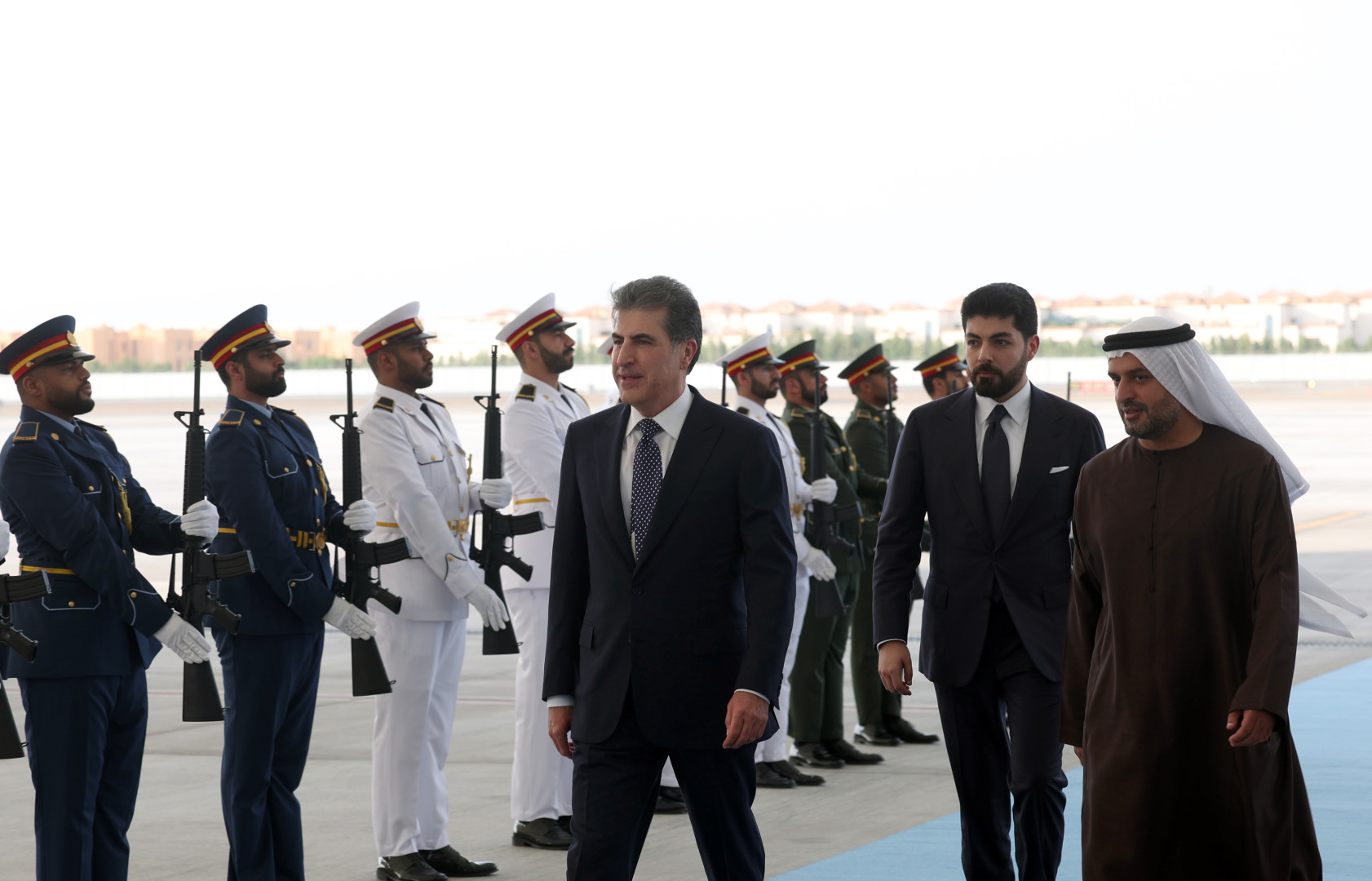
What took place in Abu Dhabi was not routine diplomacy. It was a signal—clear, deliberate, and impossible to ignore.
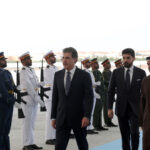
When Nechirvan Barzani appeared on the international stage accompanied by his son, the message was not about protocol or symbolism. It was about continuity of power—pre-arranged, pre-positioned, and increasingly public. This is not how leadership is introduced in a functioning republic. This is how succession is staged in a political dynasty.
For years, the Kurdistan Region has operated under a system where political authority, economic leverage, and security influence are concentrated within a single ruling structure. That reality is no longer subtle. It is being projected openly. The next generation is not emerging through institutions, debate, or electoral legitimacy—it is being presented.
That distinction matters.
Because when leadership is presented rather than chosen, the entire political framework shifts. Institutions become secondary. Process becomes decorative. The appearance of governance remains, but its substance is hollowed out.
Defenders of this model will argue predictably: that such appearances are harmless, that political families are part of regional culture, that continuity ensures stability. But stability without accountability is not strength—it is stagnation. And what is being normalized here is not continuity of policy, but continuity of control.
The deeper issue is not one appearance, one visit, or one family member stepping into view. It is the pattern behind it. Over time, authority has been consolidated to such a degree that even the future of leadership is no longer uncertain. It is managed. Curated. Decided within a closed circle long before the public is ever allowed to engage.
That is not governance. That is ownership.
And the cost of such a system is already visible. A generation of educated, capable Kurds finds itself structurally excluded from political participation. Merit competes with proximity to power—and loses. Institutions that should function independently instead orbit around a fixed center of authority. Economic opportunity follows the same gravitational pull.
This is how systems erode—not through sudden collapse, but through gradual narrowing, until participation becomes illusion.
The international dimension only sharpens the contradiction. When unelected successors are introduced on global platforms, the objective is not simply diplomatic engagement—it is validation. It is an attempt to normalize what should remain contested: the question of who governs, and by what right.
But legitimacy cannot be inherited. It cannot be staged, signaled, or secured through proximity. It must be earned—openly, competitively, and repeatedly.
What is unfolding is not accidental, and it is not temporary. It is structural. A political order is being shaped in which power reproduces itself, insulated from challenge and detached from accountability.
And history is clear about such systems: they do not fail because they are challenged. They fail because they stop listening, stop adapting, and eventually stop representing anyone beyond themselves.
The question is no longer whether this trajectory exists. It is whether it will continue unopposed.
Because if it does, the future of leadership in the Kurdistan Region will not be determined by its people.
It will be decided for them.
Author Profile

- Harki is an independent investigative journalist and human rights advocate. As a member of the National Union of Journalists (NUJ), he focuses on exposing corruption and human rights abuses in Kurdistan and Iraq. He voluntarily contributes to Kurdfile Media.
 Kurdistan9 May 2026Urgent Appeal for Sherwan Sherwani’s Life
 Opinion30 April 2026Looting Under the Flag: How Power Turned War into Private Wealth
 Democracy of Hell30 April 2026A Region in Name, A Dynasty in Practice
 Barzani24 April 2026U.S. Justice Department Targets Barzani-Linked Assets in Major Corruption Probe