Looting Under the Flag: How Power Turned War into Private Wealth
By Diyar Harki
The case now unfolding in the United States is not an isolated scandal. It is a window into a system.
When the U.S. Department of Justice moves to seize a Beverly Hills mansion allegedly tied to Mansour Barzani, the issue is not the property itself. It is what that property represents: the conversion of war, public funds, and political authority into private wealth.
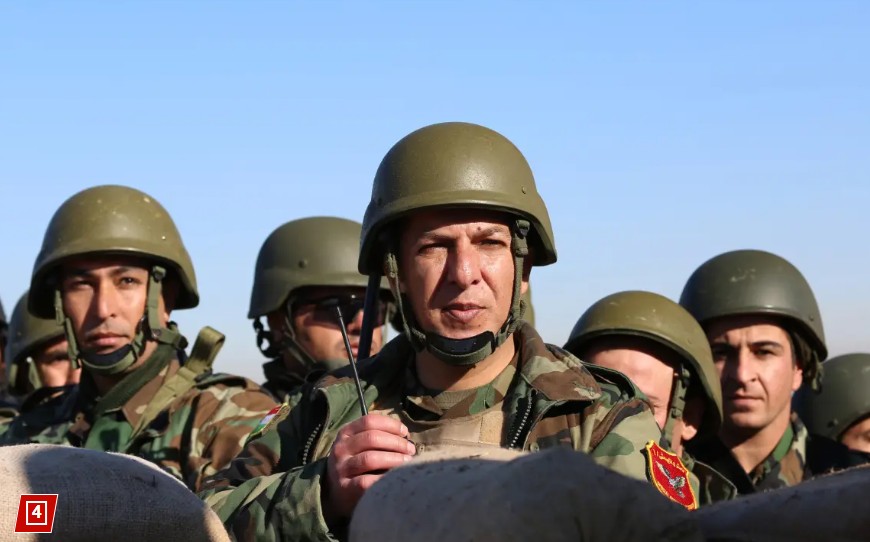
During the fight against ISIS, Kurdish fighters and civilians paid the real price—on the frontlines, in destroyed towns, and in economic hardship. Yet the allegations suggest that, behind the rhetoric of resistance and sacrifice, a parallel economy of privilege was taking shape. Fuel contracts at Erbil International Airport—a critical wartime hub—were not just logistical arrangements; they were, if prosecutors are correct, mechanisms for extraction.
This is the core of the problem: power without separation, authority without oversight. When political leadership, military command, and commercial networks merge into one structure, corruption is not an exception—it becomes the operating system.
Investigations by the Organized Crime and Corruption Reporting Project have already outlined a broader pattern: assets spread across the United States, shell companies in Delaware and the British Virgin Islands, and wealth accumulation that bears no resemblance to public-sector income. The involvement of figures such as Masrour Barzani places these concerns at the very top of the political hierarchy.
Let us be clear: this is not about attacking individuals for the sake of politics. It is about confronting a governing model that has blurred the line between state and family, between public duty and private gain.
The defenders of this system will respond predictably. They will frame these allegations as foreign interference, as misunderstandings of local realities, or as politically motivated campaigns. But that argument collapses under one simple fact: these cases are being pursued not by rivals in Erbil, but by institutions in the United States, based on financial trails that cross jurisdictions and legal systems.
The uncomfortable truth is that this is not just a Kurdish problem—it is also an international one. For years, Western governments partnered closely with Kurdish authorities, funnelling contracts, funds, and military support into the region. If those systems were exploited, then oversight did not merely fail—it was absent where it mattered most.
But the deeper responsibility lies at home.
A political system that concentrates power so tightly cannot produce accountability. It can only produce loyalty networks. And loyalty networks do not audit contracts, question pricing structures, or expose conflicts of interest—they protect them.
The result is what we are now seeing: wealth exported, assets hidden, and credibility eroded.
This moment should force a reckoning. Not a cosmetic reform, not a public relations response, but a structural shift—transparent contracting, independent oversight, and a real separation between political authority and economic control.
Without that, every new revelation will follow the same pattern: denial, delay, and eventual normalization.
And that is the greatest risk of all—that corruption ceases to shock.
Because when a society reaches that point, it is not just resources that have been lost. It is trust.
Author Profile

- Harki is an independent investigative journalist and human rights advocate. As a member of the National Union of Journalists (NUJ), he focuses on exposing corruption and human rights abuses in Kurdistan and Iraq. He voluntarily contributes to Kurdfile Media.
 Kurdistan9 May 2026Urgent Appeal for Sherwan Sherwani’s Life
 Opinion30 April 2026Looting Under the Flag: How Power Turned War into Private Wealth
 Democracy of Hell30 April 2026A Region in Name, A Dynasty in Practice
 Barzani24 April 2026U.S. Justice Department Targets Barzani-Linked Assets in Major Corruption Probe