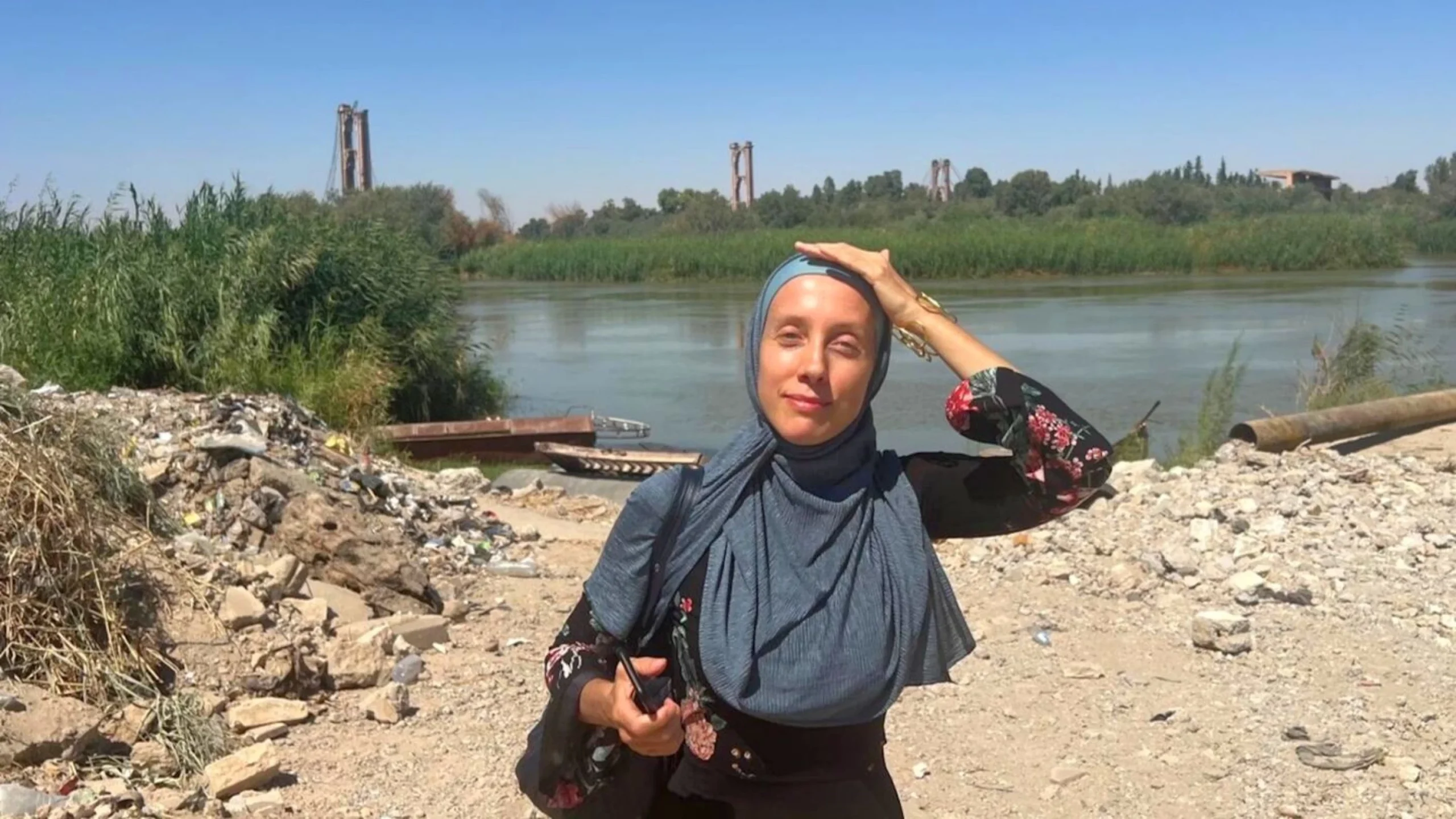
Kataib Hezbollah Frees Shelly Kittleson But the Message Is Clear
The release of Shelly Kittleson by Kataib Hezbollah after a week in captivity does not signal restraint. It signals control.
In its official statement, the group framed the decision as conditional and exceptional—explicitly warning that such a “gesture” would not be repeated. The language used is telling. Referring to Kittleson as a “defendant” and tying her release to a broader war against a “Zionist-American enemy,” the militia was not merely announcing an outcome; it was asserting authority.
This was never just about one journalist.
Kittleson, an experienced reporter who has covered Iraq’s conflicts extensively—including the activities of Iran-backed militias—was abducted in Baghdad, a city that, in theory, falls under the control of the Iraqi state. In practice, however, her kidnapping and negotiated release underline a different reality: armed groups like Kataib Hezbollah operate with a degree of autonomy that rivals, and at times surpasses, state institutions.
The circumstances of her release reinforce that imbalance. The militia credited its decision to the “patriotic stances” of the outgoing prime minister—an implicit reminder that political authority in Iraq is often mediated through armed actors rather than formal institutions. It is a dynamic in which الدولة does not monopolize force, but negotiates with it.
Kittleson’s abduction was neither random nor purely opportunistic. It occurred as she was reporting on the wider regional war involving the United States, Israel, and Iran—a context in which journalists themselves become strategic variables. Her subsequent release, under the condition that she immediately leave the country, suggests that the objective was not long-term detention, but controlled signaling: a demonstration of reach, deterrence, and narrative dominance.
The details of the kidnapping further expose the fragility of Iraq’s security environment. The حادثة involving a vehicle overturning in Babil province, the arrest of a suspect later identified as a militia member by the U.S. State Department, and the reported injuries sustained by Kittleson all point to an operation that was both organized and, at moments, chaotic—yet ultimately successful.
This is not an isolated pattern. Iraq has, for years, been a high-risk environment for journalists, particularly independents and freelancers operating outside institutional protection. Harassment, detention, and abduction have become recurring features, often linked to militia networks that function in the shadows of formal authority.
The precedent is well established. The prolonged detention of Elizabeth Tsurkov—also attributed to Kataib Hezbollah—demonstrated how such cases can evolve into long-term bargaining tools within regional power struggles.
What distinguishes this case is its speed—and its clarity. Within a week, the militia demonstrated its capacity to abduct, hold, and release a foreign journalist while dictating the terms of the outcome. That is not a breakdown of order; it is an alternative order.
For Iraq, the implications are profound. Each such incident reinforces a parallel system of authority in which militias shape security, diplomacy, and even media access. For journalists, the message is even more direct: access to Iraq’s realities comes at the discretion not only of the state, but of the armed groups that operate beyond it.
Kittleson’s release is a relief. But it is also a warning.
Author Profile

- Harki is an independent investigative journalist and human rights advocate. As a member of the National Union of Journalists (NUJ), he focuses on exposing corruption and human rights abuses in Kurdistan and Iraq. He voluntarily contributes to Kurdfile Media.
 Kurdistan9 May 2026Urgent Appeal for Sherwan Sherwani’s Life
 Opinion30 April 2026Looting Under the Flag: How Power Turned War into Private Wealth
 Democracy of Hell30 April 2026A Region in Name, A Dynasty in Practice
 Barzani24 April 2026U.S. Justice Department Targets Barzani-Linked Assets in Major Corruption Probe