34% of Kurdish MPs in Iraqi Parliament Lack Arabic Proficiency
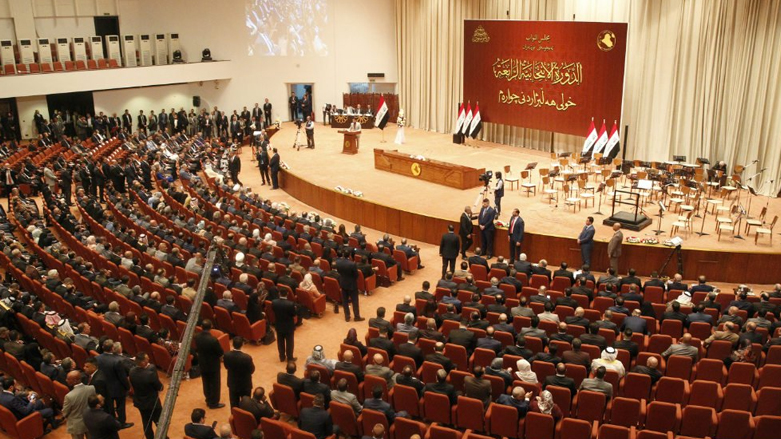
Baghdad / Erbil — New findings have raised serious questions about the quality of political representation provided by Kurdish parties in Iraq’s federal legislature. According to investigative data, around one out of every three Kurdish Members of Parliament (MPs) in the Iraqi Council of Representatives does not know Arabic or cannot communicate effectively in it, despite Arabic being the official working language of parliament.
Out of 58 Kurdish MPs, approximately 20 lack sufficient Arabic proficiency to independently read legislation, participate in debates, or conduct oversight duties. All federal laws, committee discussions, parliamentary reports, and monitoring processes in Iraq are carried out in Arabic.
Observers warn that this reality undermines both parliamentary performance and democratic accountability.
Party-by-Party Breakdown
The Kurdistan Democratic Party (KDP) holds 27 seats in the Iraqi parliament, including one seat won in Diyala province. Investigations indicate that 9 KDP MPs do not know Arabic, while 18 are able to communicate in the language.
The Patriotic Union of Kurdistan (PUK) controls 18 seats, including one gained in Baghdad. According to findings published by KurdFile, around 10 PUK MPs know Arabic, while the remainder either lack proficiency or are unable to conduct proper parliamentary conversations.
The Halwest Movement, with five seats, has four MPs who know Arabic, while one has weak language skills.
The Kurdistan Islamic Union, which holds four seats, is reported to have full Arabic proficiency among all its MPs.
The New Generation Movement, with three MPs, shows one of the weakest performances, as only one MP reportedly knows Arabic.
The Justice Group, which holds a single seat, has an MP who knows Arabic.
A Functional, Not Cultural, Issue
Political analysts emphasize that the issue is not related to cultural identity or language rights. Kurdish is an official language of Iraq, and its protection remains a constitutional right. However, the Iraqi parliament operates procedurally in Arabic, making language proficiency a functional requirement rather than a political choice.
“An MP who cannot read draft laws or engage directly in debate is structurally limited,” said one parliamentary observer. “This weakens oversight, delays decision-making, and increases dependence on party staff or translators.”
Impact on Democratic Representation
Critics argue that the lack of Arabic proficiency among a significant number of Kurdish MPs directly affects voters. Elected representatives are expected to independently scrutinize legislation, question ministers, and defend their constituents’ interests.
“When MPs rely on intermediaries to understand legislation, the chain of accountability is broken,” a former parliamentary advisor said. “The voter is no longer represented by an individual, but by a party apparatus.”
Party Responsibility Under Scrutiny
The findings have shifted attention toward Kurdish political parties, which are responsible for nominating candidates. Analysts say the pattern reflects weak vetting processes and a preference for political loyalty over institutional competence.
“This is not an individual failure; it is a party failure,” said a political researcher based in Erbil. “Federal parliamentary seats are being treated as political rewards, not as serious responsibilities.”
A Broader Democratic Question
The issue has reopened a wider debate about democratic practice in the Kurdistan Region. While parties frequently advocate for federal rights and stronger political influence in Baghdad, critics argue that such demands lose weight when representatives are unable to fully function within federal institutions.
As one analyst concluded: “Democracy is not only about winning seats. It is about having representatives who can actually use them.”
Author Profile

- Harki is an independent investigative journalist and human rights advocate. As a member of the National Union of Journalists (NUJ), he focuses on exposing corruption and human rights abuses in Kurdistan and Iraq. He voluntarily contributes to Kurdfile Media.
 Kurdistan9 May 2026Urgent Appeal for Sherwan Sherwani’s Life
 Opinion30 April 2026Looting Under the Flag: How Power Turned War into Private Wealth
 Democracy of Hell30 April 2026A Region in Name, A Dynasty in Practice
 Barzani24 April 2026U.S. Justice Department Targets Barzani-Linked Assets in Major Corruption Probe